Australian Medical
Independent Health Research
Neuroscientist Reveals: Memory Loss Is Not “Just Getting Old” — It’s a Type of Diabetes That 90% of Doctors Don’t Even Know Exists
A study from the Berlin University of Medicine identified microscopic sugar crystals that build up in neurons and destroy the brain’s connections. Discover what an American neuroscientist found in the diet of a small Korean community that could change everything you know about memory.
The Problem Nobody Is Telling You About
You walk into the kitchen and forget what you went there for.
Someone introduces themselves and, seconds later, the name is gone. You pick up your phone, stare at the screen — and can’t remember what you were going to look up.
At first, it seems like nothing. “Just getting old,” you tell yourself. Everyone says it.
But deep down, something bothers you. Because it wasn’t like this before.
You used to be the person who remembered everything. Birthdays, appointments, phone numbers, every grandchild’s name, every detail of your routine. And now, entire chunks of your day simply vanish.
Conversations freeze mid-sentence. Words escape you. You start a sentence and, before finishing it, you’ve lost your train of thought.
And the worst part? When you look for help, you always hear the same thing:
“It’s normal for your age. There’s not much you can do about it.”
But that’s a lie.
What’s Really Behind It
In 2023, researchers at the Berlin University of Medicine published a study that changed how science understands memory loss.
The discovery? Cognitive decline isn’t simply caused by aging.
According to the study, the real cause is microscopic sugar crystals that form inside neurons — like a layer of ice that slowly covers and crushes the brain’s connections, one by one.
These crystals block the synapses. They interrupt communication between brain cells. And the more sugar the brain accumulates without being able to process it, the faster memory deteriorates.
⚠️ Researchers classified this condition as Type 3 Diabetes — a type of diabetes that doesn’t show up on standard tests. That most doctors never even learned about in medical school. And that is silently destroying the memory of millions of people.
Scientists at the Mayo Clinic and Duke University confirmed the same conclusion in their most recent research.
Think about it: if your doctor doesn’t even know Type 3 exists, how can they treat what’s happening to you?
The Discovery Nobody Expected
Joshua O’Carr has been a neuroscientist for over 30 years.
He knew the studies. He understood the sugar crystal mechanism. But nothing prepared him for what happened inside his own home — when Molly, his wife, began losing her memory.
At first, it was small things. Mixing up the grandchildren’s names. Forgetting how she liked her coffee. Stopping mid-sentence without knowing what she was going to say.
Then came the night that changed everything.
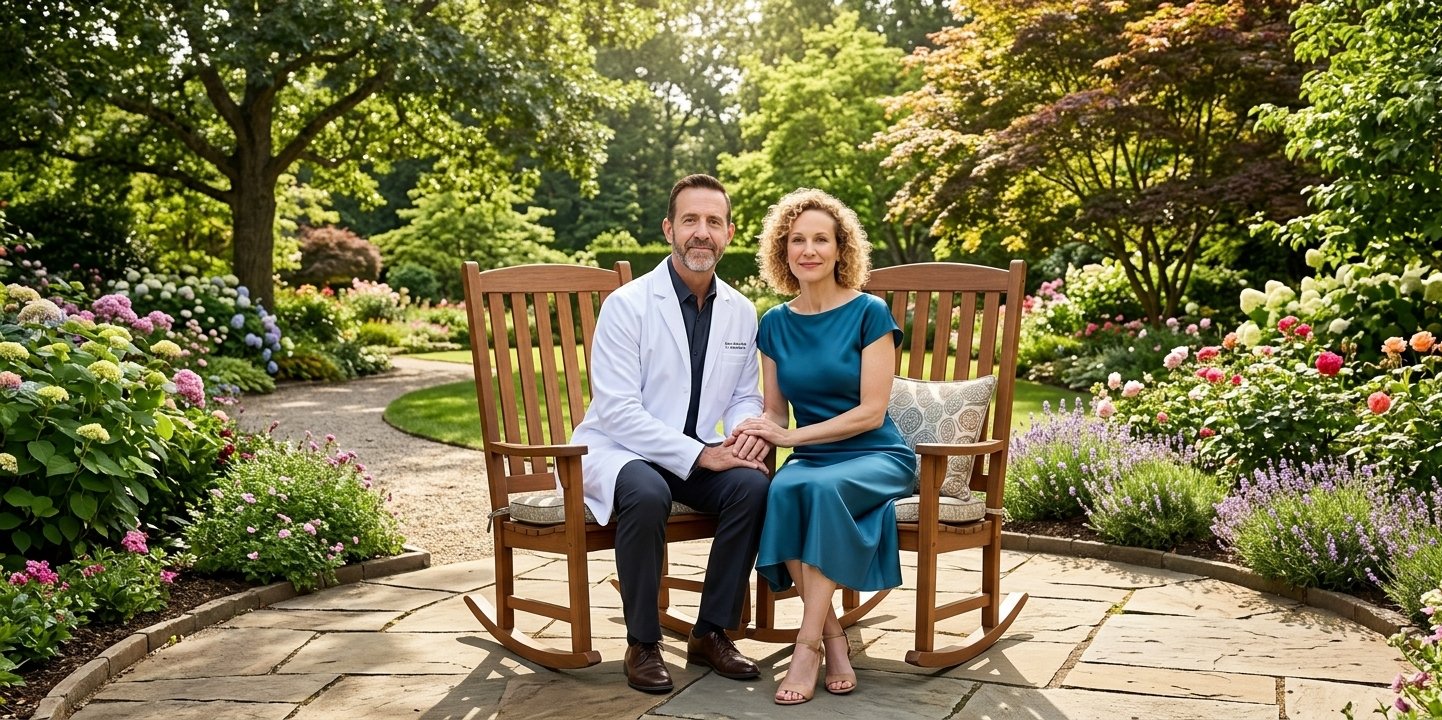
M.D. Joshua O’Carr Photo: Personal archive
Molly went out for a walk in the neighborhood she’d lived in for decades. Two hours later, she hadn’t come back. Joshua found her brought home by two police officers. She was shaking, bruised, without her purse — and with absolutely no idea how to get back home.
From that moment on, Joshua swore he would find an answer.
He tried medications. He tried cognitive exercises. He bought apps, books, memory games. Nothing touched the real problem.
Until one phone call changed everything.
The Secret of a Korean Community
Joshua reached out to Dr. Thomas Miller — one of the researchers behind the Type 3 Diabetes studies.
Miller told him about a case he couldn’t get out of his head: a 70-year-old Korean woman with a memory so sharp she recalled details of her life with stunning precision. Better than any 20-year-old.
Her secret? A simple recipe she ate every day — an egg toast with a kimchi sauce prepared in a very specific way.
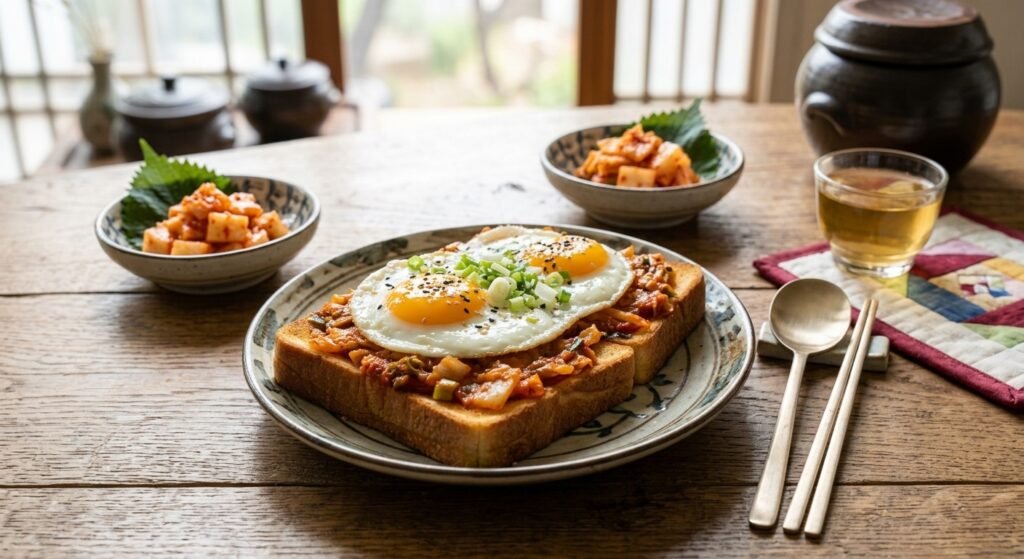
Egg toast with a kimchi sauce Photo: Institute of Life Sciences in South Korea
Miller explained that this kimchi — a Korean fermented food that looks ordinary — when prepared in an exact way, for exactly 3 weeks and 5 days, under strict conditions of temperature and light, produces a rare strain of Lactobacillus Paracasei.
This specific probiotic has demonstrated in studies a unique ability: to cross the intestinal barrier, reach the brain, and help fight the formation of sugar crystals that destroy memory.
🧬 The Institute of Life Sciences in South Korea proved that this strain can be up to 4 times more effective at repairing neural connections than conventional memory loss treatments.
But here’s the detail nobody tells you:
The base ingredient is in almost everyone’s fridge. It’s something common, cheap, that you’ve probably bought dozens of times. But if it’s not prepared exactly the right way — with the precise time and fermentation conditions — it simply doesn’t produce this strain. It becomes ordinary food, with no effect on the brain whatsoever.
Almost nobody in the Western world knows this preparation method.
Why This Works
The logic is straightforward:
It’s not a drug. It’s not a synthetic supplement. It’s not an empty promise.
It’s a discovery backed by research from institutions like the University of Berlin, Harvard, Institute of Life Sciences of South Korea, and the Mayo Clinic.
What Happened to Molly
Weeks after Joshua applied what he’d discovered, Molly began remembering things that had vanished months ago.
First, small things — where she left her glasses, what they’d talked about the day before.
Then the grandchildren’s names came back. The stories came back. The details came back.
“Within a few months, Molly asked Joshua if he remembered their wedding song. Six months earlier, she didn’t even remember they had a wedding song.”
Joshua decided he needed to share what he’d found. He couldn’t keep this to himself while millions of families face the same thing — watching helplessly as someone they love slowly disappears.
The Video That’s Circulating in the Medical Community
Joshua O’Carr recorded a video where he explains, step by step:
This video isn’t on television. It’s not in the newspapers. It’s being quietly shared among doctors and researchers who understand the gravity of what was discovered.
Free · 20 minutes · No sign-up required
Frequently Asked Questions
Do I need to buy anything to watch the video?
No. The video is completely free. Joshua explains the discovery, the studies, and what you can do starting today.
Does this replace my doctor or my medications?
No. This information is complementary. Dr. O’Carr recommends that any changes be made under medical supervision.
How long is the video?
About 20 minutes. Joshua asks that you watch until the end, because the most important part — what you can actually do — is in the final minutes.
Why have I never heard of Type 3 Diabetes?
Because most doctors were never trained to diagnose this condition. Standard tests simply don’t detect the buildup of sugar crystals in neurons.
Right now, someone you love could be losing memories that will never come back.
Every day that passes without understanding what’s really happening in the brain is another day of crystals accumulating, connections being lost, memories fading away.
Joshua O’Carr recorded this video because he nearly lost his wife to this invisible condition. He doesn’t want you to go through the same thing.
It’s 20 minutes. It could be the most important decision you make for your memory — and for the memory of the people you love.
Over 47,000 people have already watched this video
⚠️ This content is for informational purposes only and does not replace professional medical advice.
australianmedical.online © 2024 — All rights reserved
Privacy Policy | Terms of Use | Contact